


Music in Ancient Greece:
Music (or mousikē) was an integral part of life in Ancient Greece. The term included not only music but also dance, lyric poetry and the performance of poetry.
For the Ancient Greeks, music was literally considered a gift from the gods. The invention of specific musical instruments was attributed to certain deities: Hermes invented the lyre, Pan the syrinx (pan flute), and Athena the aulos (double flute). In Greek mythology, the Muses represented the different elements of music (in the broad Greek sense of the word). They were said to entertain the gods on Mount Olympus with their divine music, dances and songs.
- Musical Instruments: Greek music used a variety of instruments, both string and wind instruments. Some of the most common instruments included the lyre, the kithara, the aulos (a type of double flute) and other stringed instruments.

- Functions of Music: In Ancient Greece, music was associated with various functions, from religious to educational and social. Music was present in religious rituals, public events, theatrical performances and festivals.
The Greeks believed that the elements of music had an effect on the human body, emotions, spirit and willpower. This idea was known as the Theory of Ethos.
- Musical Theory: The Greeks believed that the celestial bodies (planets and stars) produced sounds of perfect harmony as they moved through the universe. This idea was known as the Music of the Spheres. They believed that human music imitated the intervals and harmonies of the celestial bodies.
Philosophers such as Pythagoras influenced Greek musical theory. Pythagoras discovered mathematical proportions in the strings of a lyre and developed the theory that musical proportions were fundamental to harmony.
Greek music was organised into modes, which were specific scales that determined the melodic structure. The best-known modes were the Dorian, Phrygian and Ionian modes, which later influenced medieval music.

Music in Ancient Rome:
Roman music was largely influenced by Greek traditions. The Romans adopted many Greek musical instruments and genres, but they also developed their own musical identity.
Music played an important role in entertainment and public and private celebrations in Rome. It was performed during banquets, in theatres, at sporting events and during religious festivals.
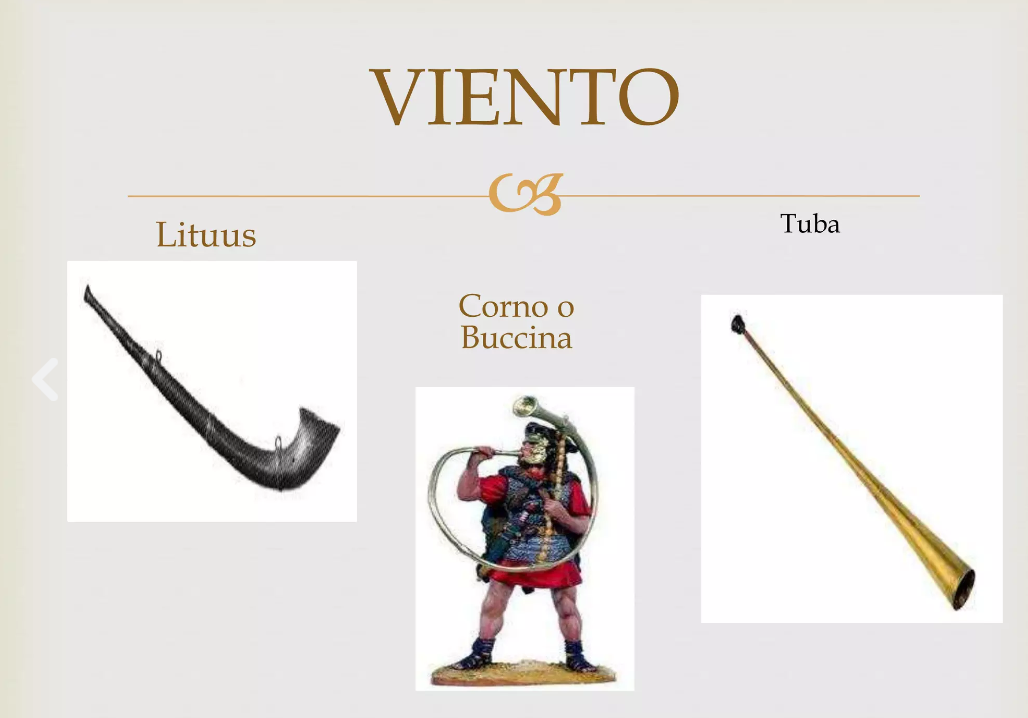
Music also played an important role in the military. It was used to motivate soldiers and coordinate their movements during marches and battles.
- Musical Instruments: As in Ancient Greece, both string and wind instruments were used in Rome. However, the lyre and the kithara were particularly popular in Roman music.








0 Comentarios